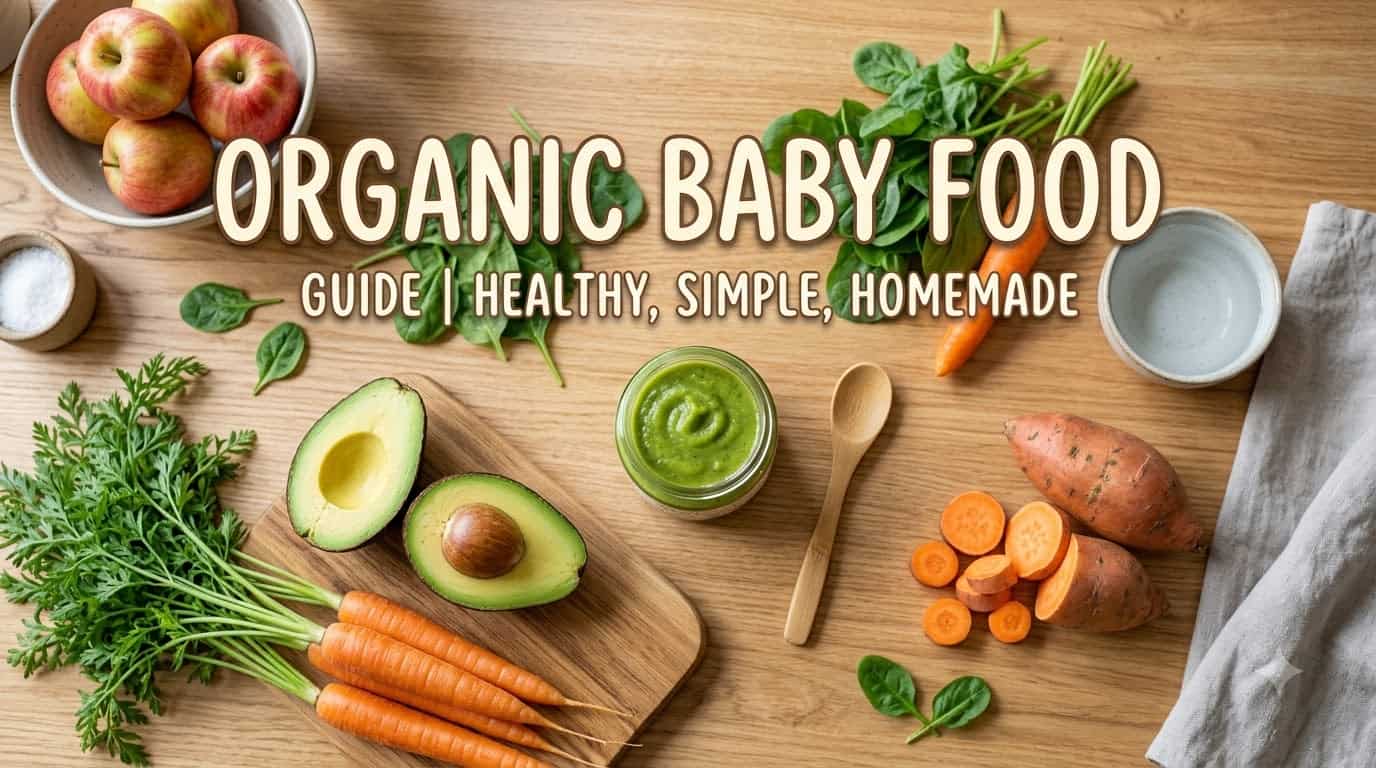
Choosing food for a baby can feel surprisingly complicated. Parents often see labels such as “organic,” “natural,” “no added sugar,” and “healthy” on baby food packages and wonder what these terms actually mean. The question becomes even more important when a baby is starting solid foods and parents want to make good choices without spending more money than necessary.
Organic baby food can be a useful option, but organic does not automatically mean that a product is nutritionally better or safer in every situation. What matters most is the overall quality of the food, the baby’s developmental readiness, variety, nutrition, preparation, and food safety.
In this guide, you will learn what organic baby food means, how to choose packaged and homemade options, what nutrients babies need, which ingredients to watch for, how to reduce choking and contamination risks, and whether buying organic is worth the extra cost.
Ikaria Lean Belly Juice for Weight Loss – What to Know
What Is Organic Baby Food?
Organic baby food is food intended for infants or young children that is made using ingredients produced according to organic farming and processing standards.
The exact meaning of the word “organic” depends on the country and its certification system. For example, under USDA rules in the United States, a product labeled “organic” generally contains at least 95% certified organic ingredients, while a “100 percent organic” product must meet a stricter standard.
Organic farming generally restricts the use of certain synthetic pesticides, fertilizers, genetically modified organisms and other inputs covered by organic regulations. However, organic certification does not mean that food is completely free from pesticides or environmental contaminants.
For parents, the important point is that the word “organic” describes how the ingredients were produced and processed. It does not by itself tell you whether a particular baby food is nutritionally complete, low in sugar, appropriate for your baby’s age, or free from choking hazards.
Is Organic Baby Food Better for Babies?
There is no simple yes-or-no answer.
Organic foods can reduce exposure to certain pesticide residues, and the American Academy of Pediatrics notes that families may consider organic foods when possible if they want to reduce children’s exposure to pesticides. At the same time, the AAP emphasizes that eating a wide variety of fruits and vegetables is important whether they are organic or conventionally produced.
This means parents do not need to feel that conventional fruits, vegetables, grains or other nutritious foods are automatically bad for their baby.
A baby eating a varied diet of nutritious conventional foods may have a better overall diet than a baby eating mostly highly processed foods simply because the packaging says “organic.”
What matters more than the organic label?
When choosing baby food, pay attention to:
- Age and developmental suitability
- Nutritional value
- Variety of ingredients
- Iron and protein sources
- Added sugar
- Sodium
- Choking risk
- Food allergies
- Safe preparation and storage
- Product packaging and expiration information
- Whether the food is appropriate for your child’s individual needs
Organic certification can be one factor in your decision, but it should not be the only one.
Nutrition Counseling for Weight Loss
When Can Babies Start Eating Baby Food?
Most babies are ready to begin complementary foods at around 6 months, when they show signs of developmental readiness.
According to the American Academy of Pediatrics, readiness includes being able to hold the head up and sit with good head control, showing interest in food, and being able to move food from a spoon into the mouth and swallow it.
Before this stage, breast milk or infant formula provides the primary nutrition babies need. Solid foods are introduced gradually as complementary foods rather than as an immediate replacement for breast milk or formula.
Every baby develops at a different pace. If you are unsure whether your baby is ready, especially if your baby was born prematurely or has feeding or developmental concerns, speak with your pediatrician.
What Nutrients Should Baby Food Provide?
The goal of baby food is not simply to fill a baby’s stomach. Complementary foods should gradually introduce different nutrients, flavors and textures.
Iron-rich foods
Iron is particularly important during infancy. Good options can include:
- Iron-fortified infant cereals
- Meat and poultry prepared appropriately
- Beans and lentils
- Eggs
- Other age-appropriate iron-rich foods
Iron-fortified cereals can be useful, but they do not need to be the only grain a baby eats.
Protein
Age-appropriate protein sources may include:
- Well-cooked eggs
- Beans
- Lentils
- Chicken
- Fish prepared safely
- Plain yogurt
- Other suitable dairy foods
Food should be prepared in a texture that your baby can safely manage.
Fruits and vegetables
Offer a variety of fruits and vegetables rather than focusing on just one “superfood.”
Examples include:
- Banana
- Avocado
- Pear
- Apple prepared until soft
- Sweet potato
- Pumpkin
- Peas
- Broccoli
- Carrots prepared appropriately
- Green beans
Different foods provide different nutrients, textures and flavors. Variety can also help babies become familiar with a wider range of foods.
The AAP recommends introducing a variety of flavors, textures and colors as babies begin eating solid foods.
Healthy fats
Babies need dietary fat as part of a balanced diet. Suitable foods may include avocado, full-fat plain yogurt and other age-appropriate foods containing healthy fats.
Parents should avoid turning baby feeding into a low-fat diet unless specifically advised by a healthcare professional.
Best Shakeology Shakes Complete Nutrition Guide
Organic Baby Food: Homemade vs. Store-Bought
Both homemade and commercially prepared baby food can have a place in a baby’s diet.
| Option | Advantages | Things to Consider |
|---|---|---|
| Homemade organic food | You control the ingredients and texture | Requires preparation and safe storage |
| Organic jar or pouch | Convenient and easy to carry | Check the ingredient list and nutrition |
| Organic baby cereal | Convenient source of fortified nutrients | Vary grains and avoid relying on one food |
| Soft family foods | Can introduce normal flavors and textures | Must be prepared safely for the baby’s age |
Homemade organic baby food
Making baby food at home allows you to choose organic ingredients and control exactly what goes into the meal.
For example, you could cook sweet potato until soft and mash it with a fork. You could also combine soft lentils with cooked vegetables or mix mashed avocado with another suitable food.
The American Academy of Pediatrics notes that homemade baby food can be less expensive and can allow babies to eat baby-friendly versions of foods prepared for the rest of the family.
Homemade food should still be prepared carefully. Fresh foods can spoil more quickly than commercially packaged foods, so refrigeration and storage practices matter.
Store-bought organic baby food
Commercial organic baby food can be useful when parents have limited time or need something convenient while traveling.
However, do not assume that every organic pouch or jar is automatically the best choice.
Read the ingredient list. Look for foods with useful nutrients and minimal unnecessary ingredients. Be cautious about products that are heavily sweetened or designed to taste much sweeter than the foods you normally serve.
Pouches are convenient, but whenever developmentally appropriate, babies should also have opportunities to eat from a spoon and explore different textures rather than relying exclusively on smooth foods.
How to Choose Organic Baby Food at the Store
A simple label-checking process can make shopping easier.
1. Check the age recommendation
Make sure the texture and ingredients are suitable for your baby’s developmental stage.
An older baby’s food may contain textures that are not appropriate for a younger infant.
2. Read the ingredient list
Ingredients are generally listed from greatest to least by weight.
Look for recognizable foods such as vegetables, fruits, grains, beans, meat, eggs or other suitable ingredients.
3. Look for added sugar
Babies do not need foods that are heavily sweetened.
A naturally sweet fruit puree is different from a product with added sugar or sweetened ingredients. Compare labels rather than assuming every fruit-based baby food is nutritionally identical.
4. Check sodium
Babies have different nutritional needs from adults, and heavily salted foods are unnecessary.
When making homemade baby food, avoid adding salt unless your child’s healthcare professional has specifically advised otherwise.
5. Consider iron
Especially during the transition to solid foods, include foods that contribute iron to the diet.
A diet consisting almost entirely of fruit purees may taste appealing but does not provide the same nutritional balance as a varied diet containing iron-rich foods.
6. Check the package
Do not use baby food from damaged, leaking, swollen or otherwise questionable packaging.
Check expiration and storage instructions and refrigerate opened products according to the manufacturer’s directions.
Important Baby Food Safety Tips
Organic food still needs to be handled safely.
Avoid honey before 12 months
Do not give honey to babies younger than 12 months because it can contain bacteria that cause infant botulism.
This applies whether the honey is organic or conventional. Organic certification does not remove this risk.
Watch for choking hazards
Some foods can block a baby’s airway.
Examples include whole grapes, nuts, chunks of meat or cheese, popcorn, raw vegetables, hard foods and spoonfuls of thick peanut butter. Foods need to be modified into safe textures and shapes for the child’s developmental stage.
Always supervise your baby while eating and follow age-appropriate feeding guidance.
Introduce common allergens thoughtfully
Foods associated with allergies include egg, peanut, dairy, soy, wheat, fish and other common allergens.
Current guidance does not generally recommend unnecessarily delaying the introduction of common allergenic foods once a baby is developmentally ready for complementary foods. Early introduction may help reduce allergy risk for some foods.
If your baby has severe eczema, an existing food allergy or another medical concern, ask your pediatrician for individualized advice before introducing potentially allergenic foods.
Reduce exposure to contaminants
Food safety is about more than bacteria.
Some foods can contain environmental contaminants such as heavy metals. One practical approach is to offer a varied diet rather than relying heavily on the same food every day.
The AAP recommends varying grains as one way to help reduce a baby’s exposure to arsenic.
Does Organic Baby Food Contain Pesticides?
Organic does not mean “pesticide-free.”
Organic agriculture permits certain substances under organic standards, and residues can also enter food from the environment. However, organic produce can have lower levels of some pesticide residues.
If reducing pesticide exposure is a major concern for your family, choosing organic when practical is one option. Washing and scrubbing fresh produce under running water is also recommended for reducing residues and contamination on the surface.
The bigger picture is important: parents should not avoid nutritious fruits and vegetables simply because organic versions are unavailable or too expensive.
Common Mistakes Parents Make
Buying only fruit-based baby food
Fruit purees are convenient, but babies also need foods that provide iron, protein and other nutrients.
Try to build variety into meals instead of offering fruit at every feeding.
Assuming organic means healthier
Organic certification tells you about production standards. It does not automatically mean a product has more vitamins, less sugar or a better overall nutritional profile.
Giving foods that are too smooth for too long
As babies develop, they need opportunities to learn different textures. Follow your child’s developmental stage and introduce appropriate mashed, lumpy and soft finger foods when ready.
Introducing too many new foods at once
Introducing foods gradually can make it easier to identify a possible reaction and understand which foods your baby accepts.
Ignoring food texture
Even a highly nutritious food can be unsafe if prepared in a shape or texture that creates a choking risk.
Organic Baby Food Myths vs. Facts
| Myth | Fact |
| Organic means completely pesticide-free | Organic farming restricts certain pesticides, but organic food is not necessarily pesticide-free. |
| Organic food is always more nutritious | Organic certification does not automatically make a food nutritionally superior. |
| Conventional produce should never be given to babies | A varied diet of properly washed fruits and vegetables can be nutritious whether produce is organic or conventional. |
| Organic baby food does not need safety precautions | Organic food can still pose choking, allergy, spoilage and contamination risks. |
| Expensive organic pouches are necessary | Homemade foods and appropriately selected conventional foods can also be nutritious choices. |
| “Natural” means the same thing as organic | Natural and organic are different labeling concepts and should not be treated as interchangeable. |
A Simple Approach to Feeding Your Baby
You do not need a complicated meal plan.
A practical approach is to build meals around a few basic categories:
- Choose a nutritious base such as vegetables, fruit, oats, another suitable grain or a soft family food.
- Add an iron-rich food such as meat, beans, lentils or iron-fortified infant cereal.
- Include an appropriate source of protein or healthy fat.
- Offer different textures as your baby becomes developmentally ready.
- Introduce a variety of foods rather than relying on the same ingredients every day.
- Prepare food safely and supervise your baby while eating.
- Follow your baby’s hunger and fullness cues rather than forcing a specific amount.
This approach is usually more useful than trying to find one perfect “organic baby food.”
Is Organic Baby Food Worth the Extra Cost?
That depends on your family’s priorities and budget.
If buying organic helps you feel comfortable about pesticide exposure and fits comfortably within your budget, it can be a reasonable choice.
But you do not need to buy everything organic to provide a healthy diet.
A practical strategy is to prioritize a varied diet of fruits, vegetables, whole grains, protein foods and other nutritious options. Buy organic when it makes sense for your family, but do not let the price of organic products prevent your baby from getting enough nutritious food.
For parents interested in overall nutrition, a broader understanding of balanced eating can also be helpful. You can read our guide to a balanced diet for weight loss for general nutrition principles, although babies and young children have different nutritional needs and should not follow adult weight-loss diets.
Conclusion
Organic baby food can be a good choice for families who prefer organically produced ingredients, but the organic label should not be the only thing you consider. A nutritious baby diet is built from variety, appropriate textures, iron-rich foods, protein, healthy fats, fruits, vegetables and safe preparation.
If you buy packaged food, read the ingredient and nutrition information rather than relying only on front-of-package claims. If you make food at home, focus on safe preparation, storage and age-appropriate textures.
Most importantly, remember that babies do not need a perfect diet. They need safe, nutritious foods introduced gradually as they grow and develop. If your baby has allergies, feeding difficulties, poor growth or a medical condition, get personalized guidance from a qualified pediatric healthcare professional.
Frequently Asked Questions
Is organic baby food healthier than regular baby food?
Not necessarily. Organic food is produced under specific organic standards, but organic certification does not guarantee that a product contains more nutrients or less sugar. The most important factors are nutritional quality, variety, appropriate texture, food safety and suitability for the baby’s developmental stage.
Can babies eat organic food from 6 months?
Many babies begin complementary foods at around 6 months when they show appropriate developmental readiness. Organic status does not change the basic timing. Before introducing solids, make sure your baby can sit with good head control and is ready to manage food safely. When uncertain, discuss feeding readiness with your pediatrician.
Is homemade organic baby food better than store-bought food?
Neither is automatically better. Homemade food gives parents control over ingredients and texture, while commercial baby food provides convenience and can be useful when traveling or when cooking is difficult. Both can be part of a nutritious feeding routine when prepared and stored safely.
What organic foods are good for babies?
Suitable options depend on age and developmental readiness. Examples can include soft cooked vegetables, mashed fruits, beans, lentils, eggs, appropriately prepared meat, plain yogurt and suitable grains. Aim for variety rather than relying on one particular “superfood.”
Can babies eat organic honey?
No. Babies under 12 months should not be given honey, whether it is organic or conventional, because of the risk of infant botulism.
Does organic baby food have pesticides?
Organic food can still contain pesticide residues because organic farming permits certain substances and environmental contamination can occur. However, organic produce can reduce exposure to some pesticide residues. Washing fresh produce thoroughly is still important.
Should babies eat only organic food?
No. Families can provide nutritious diets using both organic and conventional foods. If organic food is affordable and aligns with your preferences, it can be included. But variety and overall nutritional quality are more important than making every ingredient organic.
What should I look for when buying packaged baby food?
Check the age suitability, ingredient list, added sugar, sodium, nutritional value, texture and package condition. Look for foods that contribute useful nutrients instead of choosing products based only on attractive packaging or the word “organic.”
How can I reduce the risk of heavy metal exposure from baby food?
Offer a varied diet instead of relying heavily on one food or grain. Varying grains and including a broad selection of fruits, vegetables and protein foods can help reduce repeated exposure to contaminants that may occur naturally or environmentally in particular foods.
Best Free Artificial Intelligence Tools | 100% Free Tools